

Ocean Safety 101: Staying Safe While Catching Waves
At SurfXCape, we believe the ocean should be enjoyed but we also care about your safety. If you’re looking for surfing lessons in Cape Town, Muizenberg is a perfect spot for beginners. But no matter if you’re booking your first surf lesson or you’re already paddling out regularly, ocean safety is a non-negotiable part of every session (not only for surfers). This guide covers the essentials so you can be out in the ocean and stay safe.
Know the Conditions Before You Paddle Out
Before you get out there, take a few moments to check the weather, tides and swell size. Wind can change everything. A calm morning can turn into a windy afternoon, making paddling more difficult and waves less predictable. When in doubt, ask a local or your surf coach. They’ll know if the ocean is saying “come in” or “not today.”
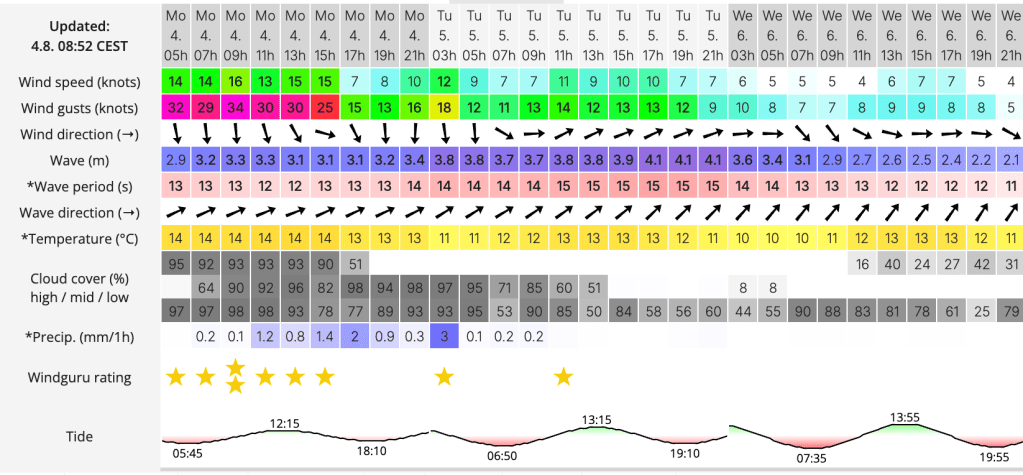
We also recommend checking Windguru:
- Wind Direction:
– Offshore (arrows pointing down) means wind coming off the shore which mostly results in cleaner and bigger waves in Muizenberg
– Crosshore (arrows pointing sideways) means wind going across the shore which creates the well-known washingmachine
– Onshore (arrows pointing down) means wind coming from the ocean towards the shore which can make the waves choppy or break quickly
- Wave height (m):
tells you the size of the swell. Beginners might want to stick to 1-2m range or stay in the front (whitewash).
- Wave period (s):
means the amount of seconds between waves. The more time between waves, the more power it has. - Tide:
Both tides have their advantages and disadvantages. For Muizenberg we suggest:
– High tide: more powerful waves, better for shortboarders, better for filming (because closer to the beach)
– low tide: less powerful waves in the front, longer paddle, better for beginner surfers and longboarders, worse conditions for filming (too far out)
Understand the Break
The “break” refers to the spot where waves begin to crash. Different breaks behave differently. Some are gentle and roll in slowly, perfect for beginners. Others are steeper, faster and more powerful. Understanding how a break works helps you choose the right place to paddle out and avoid dangerous zones like shorebreaks or closeouts.
Watch for Rip Currents
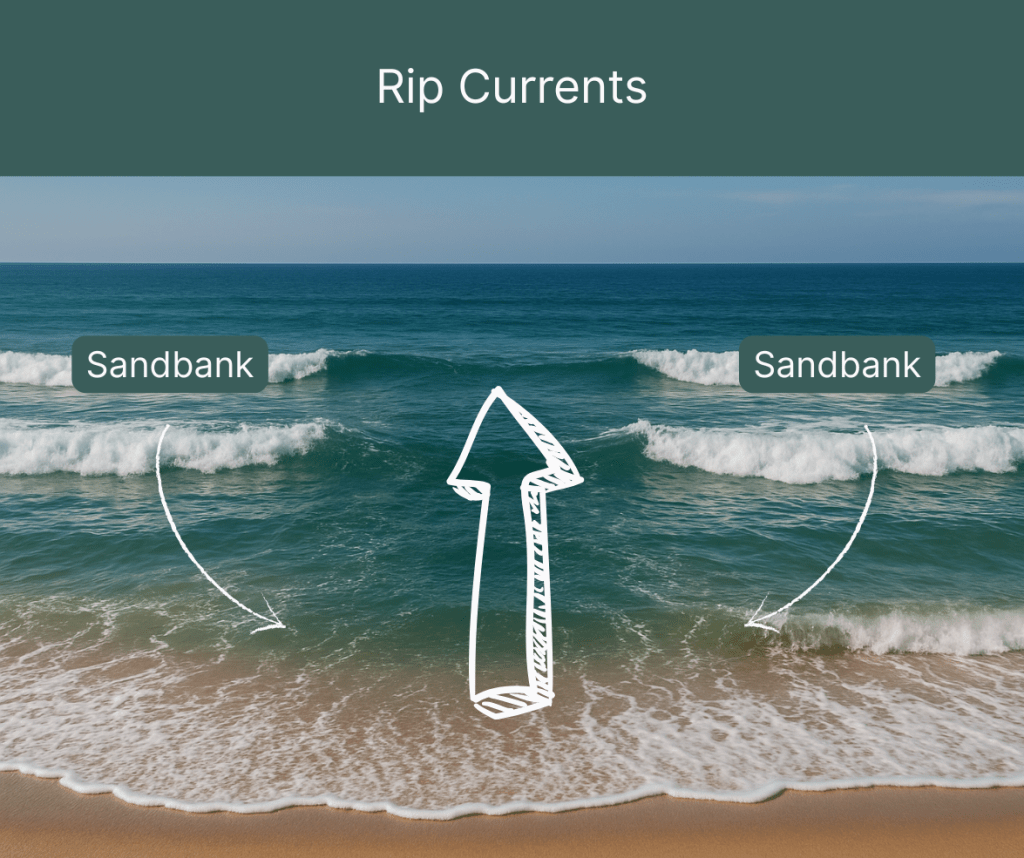
Rips are narrow channels of water pulling back out to sea. You’ll notice them by water moving away from the shore, cutting waves, tiny ripples, darker water and potentially sand being washed away from the shore.
If you’re caught in one, don’t panic. Don’t try to paddle directly against it. Instead, paddle parallel to the shore until you’re out of the current, then head back in.
Be Aware of Ocean Wildlife
While encounters are rare, it’s important to know who you’re sharing the waves with. In Muizenberg, you might spot jellyfish or bluebottles (also known as Portuguese man o’ war). They look like little floating balloons with long trailing tentacles and can sting even when washed up on shore. If you see one in the water or on the beach, give it space and warn others. In case of a sting, rinse the area with salt water (never fresh water), remove any tentacles with something like a credit card, and soak the area in hot (but not scalding) water if possible. If pain persists or there are signs of an allergic reaction, seek medical attention.
And Yes—Sharks Too
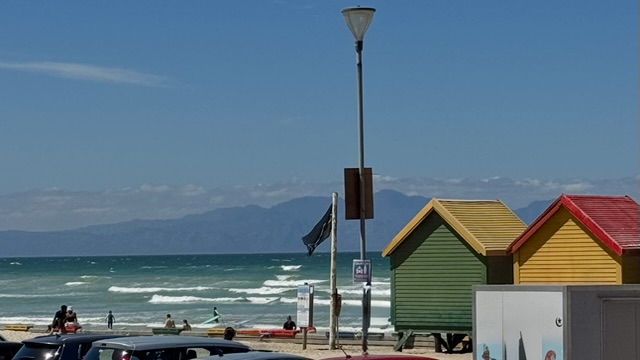
Muizenberg is home to the Shark Spotters program, a world-renowned safety initiative that keeps a watchful eye on the ocean from the mountains above. Spotters use flags to indicate conditions:
- Green means visibility is good and no sharks have been seen
- Black means visibility is poor (this is the case in Muizenberg most of the time)
- Red means a shark has been spotted recently or there’s a general alert
- White with a shark icon means a shark has been spotted and the beach is closed temporarily
If you hear the siren or see the shark flag, calmly exit the water. Actual shark incidents are very rare thanks to this system, but knowing the signals helps everyone feel safer.
Mind Your Equipment
Your surfboard is your friend and your responsibility. Always use a leash to keep it close. Try not to ditch your board, especially when there’s someone behind you!
Know How to Handle a Wipeout
Falling and wiping out are part of surfing, especially when you’re learning. If you wipe out:
- Stay calm
- Hold your breath
- Don’t fight the water
- Keep your hands above your head to protect yourself from your board or others
The ocean will always release you. Panicking burns energy and makes it harder to think clearly and hold your breath. Trust your leash and your buoyancy. You will come up.
Respect Other Surfers
Etiquette keeps everyone safe. Don’t drop in on someone else’s wave. Look left and right before paddling into a wave. Share the ocean with kindness. Beginners, don’t be afraid to ask questions, most surfers are happy to help!
Take a Surf Lesson
If you’re new to surfing or visiting Cape Town, book a surf lesson in Muizenberg. A local instructor will teach you not just how to pop up, but how to read the water, stay safe and enjoy your time out there.
Final Thoughts
Surfing is about joy and connection, but safety is the foundation. Take your time, ask questions, respect the sea and you’ll have a far better experience. The ocean is powerful, but when approached with knowledge and respect, it’s also the most beautiful playground in the world.
Want to start your surf journey the safe way? Book your first surf lesson with us today and we’ll help you ride the waves with confidence.
 SurfXCape
Leave a comment